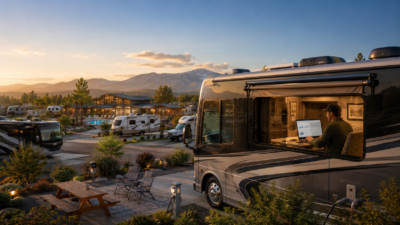
From RV Life to a Permanent Home Base: What Full-Timers Need to Know Before Choosing a Roof

After years on the road, thousands of full-time RVers eventually make the leap to a stationary home — a cabin, cottage, or small house that serves as a true base of operations. When that moment arrives, one of the most consequential decisions you’ll make has nothing to do with square footage or kitchen layout. It’s about what goes on top.
The roofing material on a permanent home is nothing like the TPO membrane stretched over your Class A or the fiberglass shell on your fifth wheel. A residential roof is a long-term commitment — one that directly affects your home’s weatherproofing, energy performance, maintenance costs, and resale value for the next two to four decades. Getting it wrong is expensive in ways that don’t show up until they’re serious problems.
This guide is specifically written for the RV community — people who understand weather exposure intimately, who value durability over aesthetics, and who ask hard questions before signing anything. If you’re transitioning to a fixed home or building a weekend retreat, understanding your roofing options — and the trade-offs between them — will save you real money and real headaches.
Why RV Owners Think About Roofing Differently
Full-timers develop a particular relationship with their roof. You’ve likely resealed a Dicor lap seam in a gas station parking lot, climbed up to inspect a soft spot in the dead of winter, or watched a hailstorm roll in across an open plain with one eye on the sky and one hand on your laptop checking radar. You know what it means for a roof to fail.
That practical experience is actually a major advantage when you approach residential roofing decisions. Where a first-time homebuyer might default to whatever’s cheapest, an experienced RVer knows to ask: How does this material handle moisture intrusion? What’s the maintenance cycle? What’s the failure mode when it goes wrong?
Those are exactly the right questions — and the answers vary significantly depending on which roofing system you choose.
The Main Residential Roofing Options: An Honest Comparison
There is no universally “best” roofing material. The right choice depends on your climate, your home’s architectural style, your budget for upfront installation versus long-term maintenance, and how long you plan to stay. Here’s a clear-eyed breakdown of the most common options.
| Roofing Material | Typical Lifespan | Avg. Installed Cost (per sq ft) | Maintenance Level | Best Climate Fit | Curb Appeal |
|---|---|---|---|---|---|
| Asphalt Shingles | 20–30 years | $3–$6 | Low | Most climates | Moderate |
| Cedar Shake / Cedar Shingles | 25–40 years | $15–$20 | Moderate | Coastal, humid, Northeast, Pacific NW | Very High |
| Metal Roofing | 40–70 years | $10–$18 | Very Low | All climates; excellent in snow/rain | High (modern) |
| Rubber / EPDM | 20–35 years | $6–$12 | Low–Moderate | Flat or low-slope roofs | Low |
| Copper Roofing | 50–100+ years | $25–$40+ | Very Low | Historic / premium homes | Premium |
| Flat Roofing (TPO/Modified Bitumen) | 15–25 years | $5–$10 | Moderate | Dry/desert climates; modern architecture | Moderate |
Note: costs above reflect general national averages and will vary significantly by region, roof complexity, and contractor.
Cedar Roofing: The Choice That Surprises Former RVers
If you’ve spent years living in a camper van or a fifth wheel, “natural wood roofing” might sound like a maintenance nightmare waiting to happen. The instinct is understandable — wood and water are an uncomfortable combination on an RV roof. But residential cedar roofing is an entirely different system, and it has a devoted following among homeowners who’ve lived through every alternative.
Cedar shake and cedar shingle roofs are one of the oldest, most proven roofing systems in North America. They’ve been used on coastal New England homes for centuries for a straightforward reason: properly installed and maintained, cedar performs remarkably well in climates that would destroy lesser materials. The natural oils in the wood resist moisture. The material breathes in a way that synthetic roofing cannot. And the visual result — that warm, textured, organic look — is simply something you cannot replicate with asphalt or metal.
What Makes Cedar Different
Cedar’s performance characteristics come from the wood itself, not from coatings or synthetic additives. Western red cedar contains natural tannins and oils that inhibit rot and repel insects. When properly ventilated, cedar shingles actually dry out between rain events, which extends their lifespan considerably. This is a meaningful distinction from asphalt, which traps moisture at the substrate level.
There are two main forms of cedar roofing:
- Cedar shingles — sawn on both faces, uniform in thickness at the butt end, providing a smooth, formal appearance.
- Cedar shakes — split on one or both faces, giving a rougher, more dimensional texture that many homeowners consider the more characterful choice.
Shakes are thicker and generally considered more durable for high-wind and high-moisture environments. Shingles offer a cleaner aesthetic for homes with more restrained architectural character.
Why It’s Particularly Popular in Coastal and Northeast Markets
If your permanent home base is in New England, the Mid-Atlantic, or along any of the country’s coastal regions — areas where salt air, seasonal humidity, and hard winters are facts of life — cedar has a genuine performance argument in its favor. Asphalt shingles in coastal climates can granule-strip prematurely under UV exposure and salt air. Metal holds up well but can be polarizing aesthetically on traditional or historic structures.
Cedar sits at an intersection of form and function that’s difficult to replicate. Contractors who specialize in this material — like the team at ANPoint Exteriors, which handles cedar shake and shingle installation on Cape Cod https://anpointexteriors.com/cedar-roofing/ — emphasize that proper installation technique matters as much as the material itself. Ventilation, spacing, substrate preparation, and fastener selection all directly affect how long a cedar roof performs in a given climate.
The Real Cost of Roofing: Upfront vs. Lifetime
One of the most important concepts for anyone who’s spent time in the RV community is the idea of total cost of ownership. Full-timers understand this viscerally — they know that the “cheap” refrigerator mod ends up costing more when it fails on the road. The same logic applies to residential roofing.
Cedar roofing carries a higher upfront installation cost than asphalt — typically $15 to $20 per square foot installed versus $3 to $6 for standard three-tab shingles. But the calculus changes when you look at lifespan, energy performance, and how the material affects resale value.
A cedar roof on a coastal New England home can last 35 to 40 years with reasonable maintenance. An asphalt roof in the same environment might need replacement after 20 to 22 years. Over a 40-year horizon, the second asphalt roof — plus disposal and reinstallation costs — can close much of that upfront price gap. This is before accounting for the documented premium that buyers are willing to pay for homes with cedar exteriors in markets where the material is architecturally expected.
What to Ask Your Roofing Contractor Before You Sign
The RV community has a healthy skepticism toward salespeople, and that skepticism serves you well when interviewing roofing contractors. Here are the questions that separate specialists from generalists:
- What grade of cedar do you use? Blue Label or Number 1 grade cedar is the standard for roofing. Lower grades have more knots and inconsistencies that affect performance. Don’t accept a vague answer.
- How do you handle ventilation? Proper air circulation below the cedar is critical to lifespan. A contractor who doesn’t discuss ventilation as part of the installation plan is a red flag.
- What underlayment system do you use? Breathable underlayments designed for cedar — not the standard felt paper used for asphalt — preserve the wood’s natural moisture management properties.
- Do you install with stainless steel or hot-dipped galvanized fasteners? In coastal environments, standard fasteners can corrode and stain the wood within years. This matters.
- What warranty coverage do you offer on workmanship? Material warranties exist, but the installation warranty is often where real protection lives.
Building Your Home Base: A Practical Checklist for RV-to-Home Transitions
Beyond roofing, the shift from full-time RV living to a stationary home involves a set of decisions that benefit from the practical mindset that road life develops. Here’s a summary framework for the exterior evaluation process:
| Exterior System | Key Question to Ask | Common Mistake |
|---|---|---|
| Roofing | What is the total cost over the likely ownership period? | Choosing the cheapest upfront option without modeling lifespan |
| Siding | How does this material perform in the local climate (UV, moisture, freeze-thaw)? | Selecting siding by appearance without researching maintenance requirements |
| Windows & Doors | What is the energy efficiency rating, and how are the seals protected from the elements? | Buying standard builder-grade windows for a coastal or high-wind location |
| Gutters & Drainage | Where does water go during a major storm event? | Installing gutters without considering the grading and drainage around the foundation |
| Ventilation | Is attic and roof ventilation adequate for the chosen roofing material? | Treating ventilation as an afterthought rather than a core system decision |
How Climate Should Drive Your Roofing Decision
There is no single correct roofing material for every location in the United States. The country’s climate diversity — from the high desert Southwest to the salt-spray coast of New England, from the tornado corridor to the Pacific Northwest rain belt — means that the right answer genuinely differs by geography.
Here is a practical framework for matching material to climate:
- New England / Mid-Atlantic / Gulf Coast: Cedar or metal both perform well. Cedar is architecturally native to these regions and handles humidity with proper installation and maintenance.
- Pacific Northwest: Metal and cedar are strong contenders. The region’s high annual rainfall demands exceptional ventilation and moisture management in any roofing system.
- Sun Belt / Southwest: Tile, metal, and modified bitumen perform better in extreme UV and dry heat environments. Cedar is less ideal in climates with very low annual humidity.
- Mountain West / High-Wind Areas: Metal or architectural asphalt for high-wind resistance. Cedar shakes can be installed with enhanced fastening in moderate-wind zones.
- Midwest / Great Plains: Architectural asphalt or metal for hail and wind resilience. Cedar is viable but requires impact-resistant installation in storm-prone areas.
The Environmental Case for Natural Materials
Many in the RV community are drawn to minimalism and sustainability — two values that translate naturally into the choice of building materials when settling into a permanent structure. Cedar has a legitimate environmental story that synthetic roofing materials cannot match.
Sustainably harvested cedar is a renewable resource. The material is biodegradable at end of life — a significant contrast to asphalt shingles, which represent one of the largest waste streams in the residential construction industry, with an estimated 11 million tons going to landfill annually in the United States. Cedar requires no petroleum-derived binders and no fiberglass mat substrates.
For a community that has spent years refining its footprint and thinking carefully about consumption, the material composition of a permanent roof is a relevant consideration — not a marketing talking point.
Frequently Asked Questions
How is a residential cedar roof different from the membrane roof on an RV?
They share almost nothing except the word “roof.” RV roofs are low-slope or flat membranes — typically TPO, EPDM, or fiberglass — designed for lightweight flexibility and UV resistance. Residential cedar roofing is a pitched, layered system of overlapping wooden shingles or shakes that manages water through gravity and breathability rather than waterproofing membranes. Installation, maintenance, and failure modes are entirely different.
How long does a cedar roof actually last in a coastal climate?
With professional installation using quality materials and proper ventilation, a cedar roof in a coastal environment like Cape Cod or the Maine coast can last 30 to 40 years. The key variables are installation quality, the grade of cedar used, ventilation design, and maintenance consistency. Poorly installed cedar in a high-humidity environment can deteriorate in 15 years. Well-installed cedar with periodic maintenance can exceed 40 years.
Is cedar roofing a practical choice if I’m only at my home base part of the year?
Yes, with some planning. Cedar requires periodic professional inspection and occasional moss/algae treatment — but these are scheduled maintenance items, not constant vigilance. Part-time homeowners in the Northeast and Pacific Northwest should budget for a professional inspection every 3 to 5 years and arrange for someone to clear debris after major storms. The material itself does not require your presence to perform.
What is the actual cost difference between cedar and asphalt over 40 years?
At current pricing, a 2,000 square foot cedar roof might cost $30,000–$40,000 installed versus $10,000–$15,000 for architectural asphalt. However, asphalt in demanding climates often needs replacement after 20–22 years. A second asphalt roof installation adds another $10,000–$15,000, plus disposal costs — which can reach $3,000–$5,000. On a 40-year timeline, the effective cost gap narrows considerably, particularly when cedar’s resale value premium is factored in for markets where the material is architecturally expected.
Does cedar roofing require special fire treatment?
Natural cedar is a combustible material. In wildfire-prone regions or areas with strict local fire codes, cedar shingles treated to Class A or Class B fire resistance ratings are available. In most Northeast and Mid-Atlantic markets, fire-rated cedar products are available and recommended. Always verify local building code requirements before specifying a roofing material.
Can I install cedar roofing myself as a former RV DIYer?
RV roof maintenance creates useful skills — comfort with heights, basic sealing and repair techniques, and a practical understanding of how roofing systems fail. However, residential cedar roofing installation requires specialized skills around ventilation design, underlayment selection, fastener placement, and shingling geometry that go well beyond RV maintenance. Improper installation is the primary driver of premature cedar roof failure. For a long-term home base investment, professional installation by a contractor who specializes in wood roofing is strongly advisable.
What should I look for when hiring a cedar roofing contractor?
Look for contractors who can demonstrate direct, extensive experience with cedar specifically — not just general roofing. Ask for photos of completed cedar projects in comparable climates, ask about the grade of cedar they use, request a detailed breakdown of the ventilation and underlayment system, and confirm they use stainless steel or hot-dipped galvanized fasteners. A specialist in wood roofing will engage with these questions immediately; a generalist may not.
How does cedar roofing affect home resale value?
In markets where cedar is architecturally established — coastal New England, parts of the Pacific Northwest, and historic neighborhoods throughout the Northeast — cedar roofing commands a genuine resale premium. Buyers in these markets recognize the material, understand its value, and are often willing to pay more for a home where the cedar is in good condition. In markets where cedar is uncommon, the premium is less predictable, and the cost-benefit analysis should focus primarily on longevity and performance rather than resale value.
Final Thoughts: The RV Mindset Is Your Advantage
Years of life on the road teach you something that most first-time homebuyers have to learn the hard way: the difference between an upfront cost and a real cost. You know what it means to maintain a system carefully, to ask questions before you commit, and to think about failure modes before they happen.
Carry that mindset into your roofing decision. Whether you choose cedar, metal, asphalt, or another system entirely, the path to a good outcome is the same one you’ve been following for years: understand what you’re buying, know who you’re hiring, and make the decision based on the full picture — not just the number on the first estimate you receive.
Your home base is meant to be a place you can leave and return to with confidence. The right roof is a significant part of making that possible.